Brain Roll
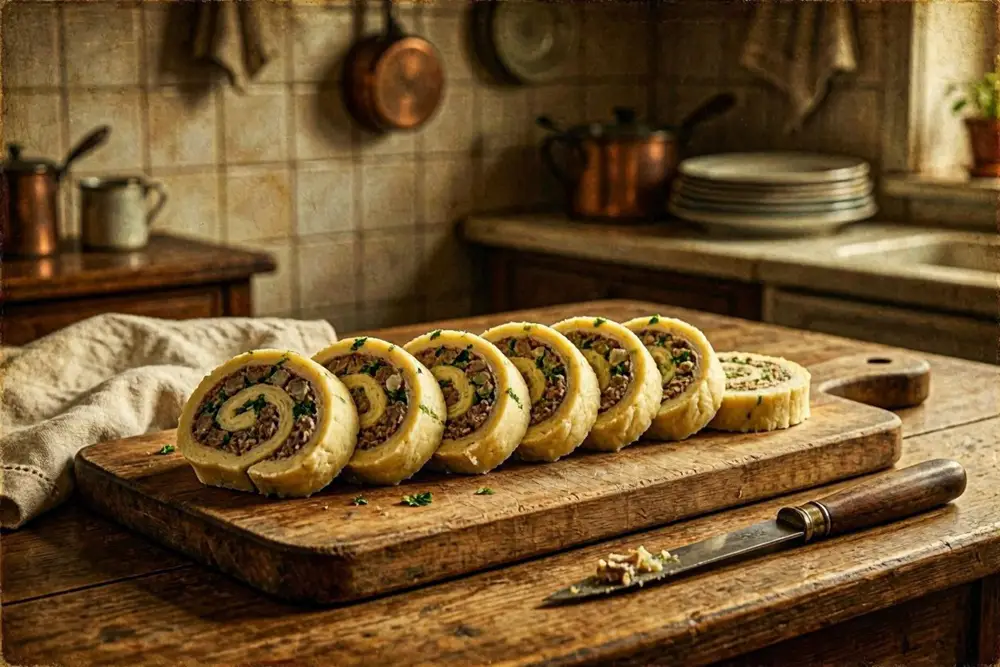
A delicate Central European savory roulade of potato-egg dough filled with pan-fried calf's brain, onion, and parsley — served warm as an appetizer.
Historical recipe
Modernised adaptation of an early 20th‑century source. Not independently kitchen-tested by Attic Recipes. Quantities, temperatures, and food safety guidance have been updated for a contemporary kitchen — results may vary and errors may exist. Nutritional values, where provided, are estimates only and have not been laboratory tested. Always follow current food safety guidelines for your region. If you have a health condition, allergy, or dietary requirement, consult a qualified professional before preparing this recipe.
Use of this recipe is entirely at your own risk and subject to our Terms of Service and Privacy Policy. Attic Recipes accepts no liability for any adverse outcome.
- Eggs
- Dairy
- Gluten
Additional notes
-
Warning
The liaison filling contains egg yolks added off the heat. This step does not reach the 74°C (165°F) threshold required to pasteurize eggs. Pregnant women, children under 18, elderly individuals, and immunocompromised people should avoid this preparation or use pasteurized egg yolks.
Pasteurized liquid egg yolks can be substituted in the liaison step at the same quantity.
-
Warning
Calf's brain is very high in cholesterol. This dish is not appropriate for regular consumption by individuals with cardiovascular disease, hypercholesterolemia, or related conditions. Consult a healthcare provider before consuming organ meats if you have a relevant medical history.
-
Note
Brain and other central nervous system tissues from cattle are subject to food safety regulations in many countries due to BSE (bovine spongiform encephalopathy) risk. In the EU and UK, calf's brain from animals under 12 months is generally permitted for sale. Always source from a licensed butcher and verify current local regulations. Do not substitute brain from older cattle.
- 1
Preheat the oven to 180°C (350°F) / 160°C fan. Line a jelly roll pan (approx. 30×40 cm) with baking parchment and grease lightly.
- 2
Beat the 80g softened butter until pale. Add the 3 egg yolks one at a time, beating well after each addition.
- 3
Add the 110g cooled mashed potatoes and the 125ml sour cream. Mix until smooth and uniform.
- 4
Sift in the 3 tbsp flour and 0.5 tsp salt. Fold gently until just combined — do not overwork.
- 5
Gently fold in the stiffly beaten egg whites in two additions, preserving as much volume as possible.
Tip The batter should be thick but spreadable, similar to a soufflé base. - 6
Pour the batter onto the prepared pan and spread evenly to a thickness of about 1 cm. Bake for 15–20 minutes, until the surface is golden and the sheet springs back when lightly pressed.
- 7
While the dough bakes, prepare the filling. Chop the cleaned 250g calf's brain into small, roughly equal pieces.
- 8
Melt 20g butter in a saucepan over medium heat. Add the finely chopped onion and cook, stirring, until soft and translucent, about 5 minutes.
- 9
Add the chopped brain and 2 tbsp parsley. Cook, stirring gently, until the brain is just cooked through — it should be firm but not dry, about 4–5 minutes. Season with 0.25 tsp salt and 0.25 tsp white pepper.
Tip Brain overcooks quickly. Remove from heat as soon as it loses its pink color throughout. - 10
Remove the pan from the heat and let the mixture cool for 1–2 minutes. Stir in the 2 egg yolks. The residual heat will thicken the filling into a creamy liaison. Do not return to the heat after adding the yolks — this step does not reach a temperature that pasteurizes the yolks; see the safety note below.
- 11
As soon as the dough sheet comes out of the oven, turn it out onto a clean kitchen towel or a fresh sheet of parchment. Peel away the baking paper carefully.
- 12
Spread the brain filling evenly over the warm dough sheet, leaving a 2 cm border on all sides.
- 13
Using the towel to assist, roll the dough into a tight log. Work quickly while the dough is still warm and pliable.
- 14
Slice immediately into rounds about 2 cm thick and arrange on a serving plate. Serve warm.
Nutrition Information per 1 serving (approx. 110g)
Nutritional values are approximate estimates and may vary based on specific ingredients used, preparation methods, and portion sizes.
Serving Suggestions
Serve as a warm appetizer with a light green salad dressed in lemon and olive oil, or alongside pickled vegetables to cut the richness. A small glass of dry white wine or a light sparkling wine pairs well.
About This Recipe
Brain roll belongs to a category of elegant offal preparations that were once entirely unremarkable in Central European home cooking. In the early twentieth century, using every part of an animal was not a philosophy — it was simply how households operated. Brain, kidneys, sweetbreads, and liver appeared in cookbooks alongside roasts and pastries, treated with the same care and the same expectation of a good result.
This particular dish is built around a delicate potato-egg roulade — a sheet of baked dough enriched with butter, sour cream, and mashed potato, light enough to roll without cracking when warm. The filling is a brief pan-fry of calf’s brain with onion and parsley, bound at the last moment with egg yolks that set from residual heat alone. The result is soft, mild, and rich without being heavy, with a creamy filling that holds its shape when sliced.
It reads as unusual today. In the context it came from, it was a considered appetizer.
Why It Works
The potato in the dough plays the same role it plays in gnocchi or potato bread: it provides starch without gluten development, keeping the sheet tender and pliable rather than chewy. Folding in stiff egg whites introduces air that gives the baked sheet a slight lift. The small quantity of flour is structural only — just enough to prevent the batter from spreading unevenly on the pan.
The filling uses a classic liaison technique. Egg yolks added off the heat act as an emulsifier and thickener without scrambling, producing a creamy, cohesive filling that clings to the dough rather than sliding out when the roll is cut. Brain is high in moisture and delicate in texture, which means it overcooks fast — the short pan-fry and the off-heat liaison step are both deliberate protections against a grainy or dry result.
Modern Kitchen Tips
Have the filling fully cooked and ready before the dough goes into the oven. The rolling step needs to happen immediately while the sheet is warm; if it cools, the potato dough stiffens and cracks. A clean kitchen towel placed under the turned-out sheet makes rolling considerably easier — it lets you use the towel as a guide rather than handling the delicate dough directly.
Brain is not always available at standard supermarkets. A traditional butcher or specialty offal supplier is the most reliable source. Ask for calf’s brain (veal brain) specifically; brain from older animals is subject to stricter food safety restrictions in most European markets.
A refined appetizer from the Central European table — offal cooking at its most careful.
The Story Behind This Recipe
Historical Context
Early twentieth-century Central European cooking made extensive use of offal — organ meats treated not as a by-product but as a refined ingredient suited for appetizers and light supper dishes. Brain in particular was associated with gentle, careful cooking and appeared frequently in recipes for delicate roulades and terrines. Period recipes for this style of roll typically did not specify quantities with precision; amounts like 'a little flour' and 'a small head of onion' were left to the cook's judgment. The technique of binding a filling with egg yolks added off the heat — a classic liaison — was standard practice long before it was codified in cooking literature.
Modern Kitchen Adaptation
The original recipe gave no weight for the brain and no oven temperature. The 250g quantity is estimated for a standard jelly roll pan and four to six appetizer servings; oven temperature of 180°C is estimated from comparable period baked roulades. Flour quantity was given as 'a little' and is estimated at 3 tablespoons based on the liquid-to-starch ratio of the other ingredients. The egg yolk liaison step is preserved exactly as in the period method, but the instruction to let the filling cool briefly before adding the yolks is made explicit here to reduce the risk of scrambling. Lard was likely the original cooking fat; it has been replaced with unsalted butter throughout. Rendered pork lard or goose fat remain period-appropriate alternatives at equivalent quantities.
This recipe is an independent modern adaptation developed from historical sources in the public domain. It is provided for informational and educational purposes only and does not constitute professional dietary, nutritional, or medical advice. Food preparation involves inherent risks. The reader assumes full responsibility for safe food handling, ingredient sourcing, and adherence to current local food safety guidelines. The site operator accepts no liability for outcomes resulting from the preparation or consumption of this recipe.
One recipe.
Every week.
You Might Also Like
More recipes from the same category
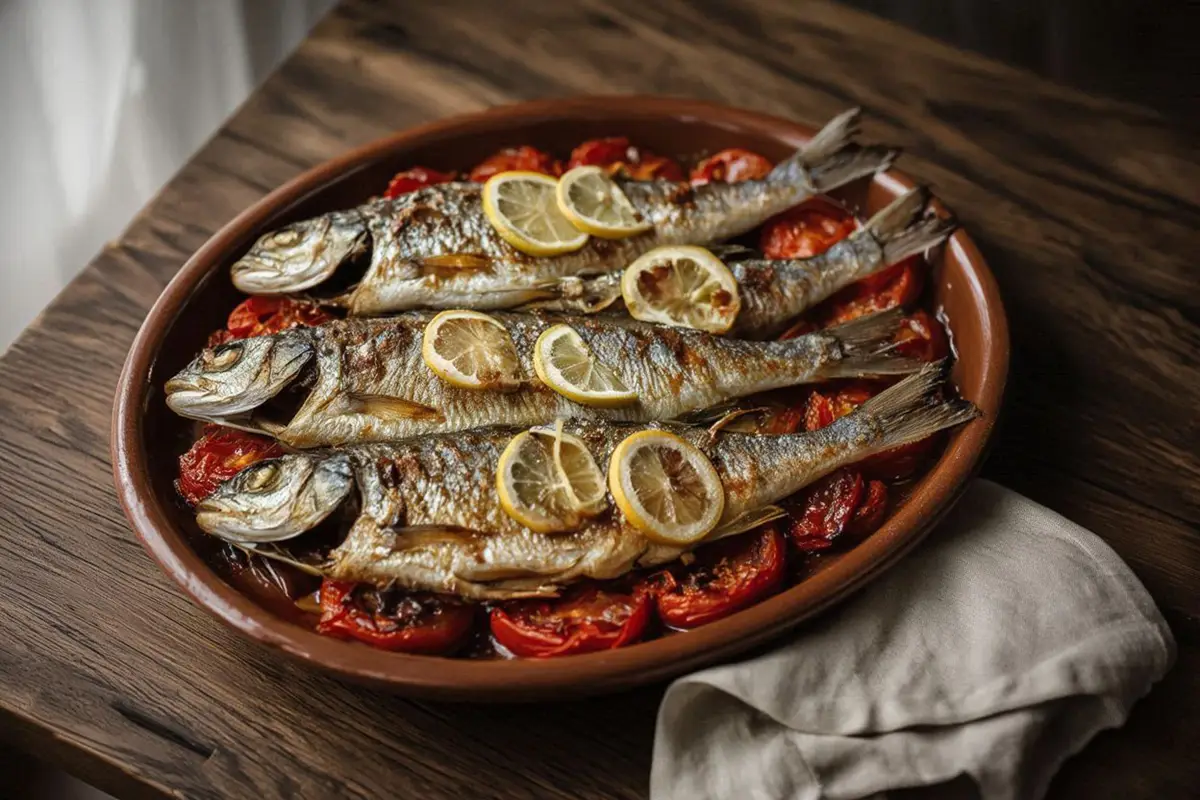
Baked Fish with Tomatoes
Whole fish baked over ripe tomatoes with generous olive oil and lemon — a simple, fragrant Central European oven dish.
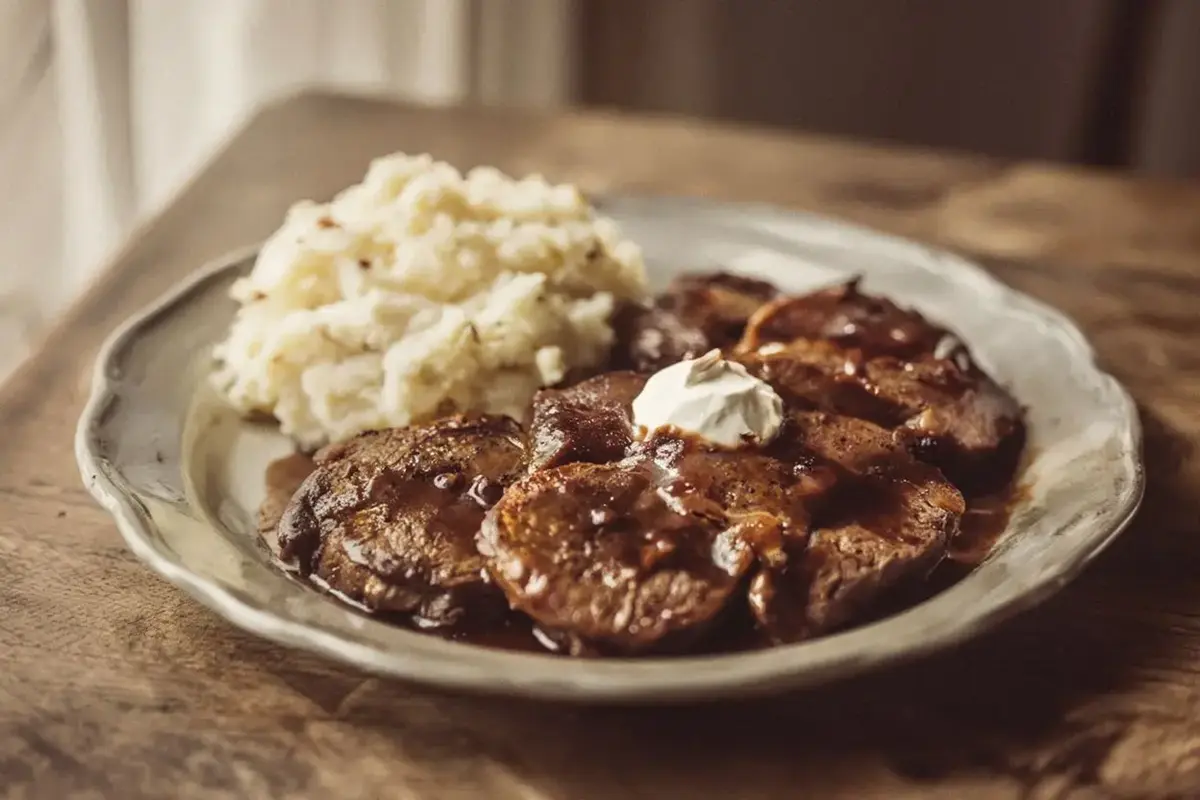
Beef Kidney with Wine
Beef kidney marinated in red wine, braised with herbs, finished with sour cream. Tender, rich, and deeply flavored.
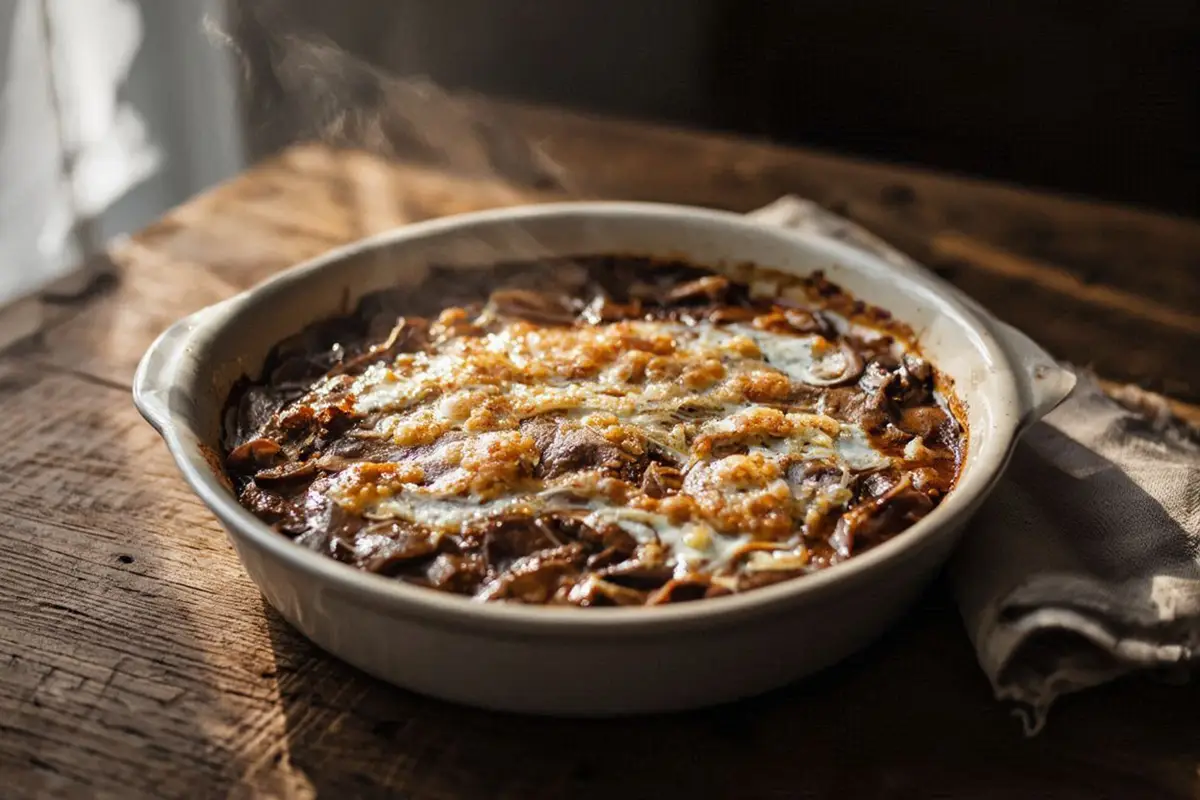
Beef Tongue in Mushroom Sauce
Tender sliced beef tongue layered in a rich dark mushroom sauce, finished with sour cream, Parmesan, and a golden oven crust.