Bean Soup Cooked with Beef
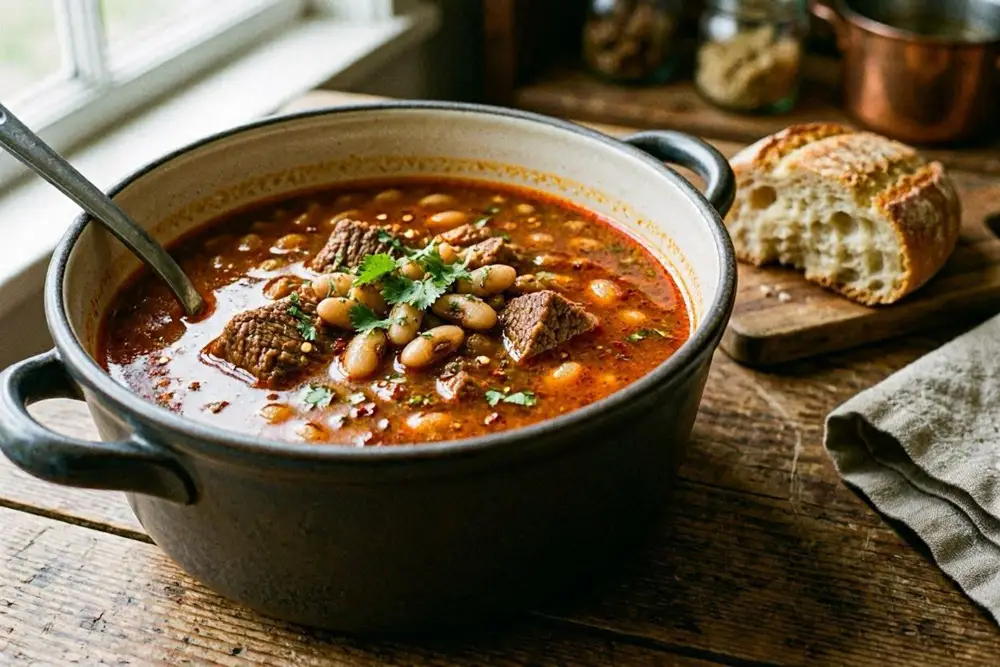
White beans and beef shoulder slow-simmered with a bouquet garni, finished in the oven with a paprika-spiced pan roux. A deeply satisfying one-pot meal.
Quick Summary
Bean Soup Cooked with Beef is a Central European stew of white beans and seared beef shoulder simmered in a paprika roux broth. It takes about 180 minutes, with a two-stage method creating a rich, glossy, deeply flavored soup.
Historical recipe
Modernised adaptation of an early 20th‑century source. Not independently kitchen-tested by Attic Recipes. Quantities, temperatures, and food safety guidance have been updated for a contemporary kitchen — results may vary and errors may exist. Nutritional values, where provided, are estimates only and have not been laboratory tested. Always follow current food safety guidelines for your region. If you have a health condition, allergy, or dietary requirement, consult a qualified professional before preparing this recipe.
Use of this recipe is entirely at your own risk and subject to our Terms of Service and Privacy Policy. Attic Recipes accepts no liability for any adverse outcome.
- Gluten
- Celery
- 1
The evening before, sort through the 500g of dried white beans and discard any that float when covered with cold water — these are hollow and will not cook properly. Drain and cover with fresh cold water. Leave to soak overnight, at least 8 hours.
- 2
The next day, drain the soaked beans and transfer to a large pot. Cover with fresh cold water and bring to a full boil. Drain and discard this first cooking water completely — it removes compounds that cause bitterness and digestive discomfort.
- 3
Return the beans to the pot. Add the 200g of whole yellow onion and the bouquet garni. Cover with fresh boiling water and cook over medium heat, maintaining a steady simmer, until the beans are fully tender — about 60 to 75 minutes depending on the age of the beans. Do not let the water drop below the level of the beans; top up with boiling water as needed.
- 4
While the beans cook, cut the 1000g of beef shoulder into large chunks if not already done. Set aside.
- 5
When the beans are tender, remove and discard the bouquet garni and the whole onion. Drain the beans, reserving the cooking liquid separately.
- 6
Heat the 2 tbsp of lard in a wide, heavy saucepan or Dutch oven over medium-high heat. Add the beef chunks and the 150g of finely chopped onion. Fry together, stirring occasionally, until both the meat and onion are deeply browned — about 15 to 20 minutes. Do not rush this step; the browning builds the flavour base of the entire dish.
Tip Brown in batches if the pan is crowded — the meat should sear, not steam. - 7
Sprinkle the 1 tbsp of flour evenly over the browned meat and onion. Stir and continue frying for 2 to 3 minutes, until the flour smells nutty and has turned lightly golden.
- 8
Remove the pan from the heat. Add the 1 tbsp of sweet paprika and the 0.25 tsp of black pepper. Stir quickly to combine — keeping the pan off the heat prevents the paprika from scorching and turning bitter.
- 9
Return the pan to medium heat. Add the drained beans to the meat mixture and stir slowly to combine. Add enough of the reserved bean cooking liquid to just cover everything — approximately 500 to 700ml. Season with the 1.5 tsp of salt, taste, and adjust.
- 10
Transfer the pot to the preheated oven at 160°C (320°F). Cook uncovered for 60 minutes, until the broth has thickened and the meat is completely tender. The surface should show a gentle, slow bubble — if it is boiling vigorously, reduce the temperature by 10°C.
Tip The dish is done when the broth has a light, glossy body and the beans hold their shape but yield easily when pressed.
Nutrition Information per 1 serving (approx. 430g)
Nutritional values are approximate estimates and may vary based on specific ingredients used, preparation methods, and portion sizes.
Serving Suggestions
Serve in deep bowls with dense rye bread or crusty white bread for mopping the broth. A spoonful of soured cream stirred in at the table is a traditional accompaniment. The soup thickens considerably on standing and reheats well the next day with a splash of water or stock.
About This Recipe
Bean soup cooked with beef is one of those dishes that rewards patience at every stage — the overnight soak, the discarded first water, the unhurried browning of meat and onion, the slow hour in the oven. Each step has a purpose, and the result is a broth with genuine body and depth rather than the thin, watery result that shortcuts tend to produce.
The method separates the cooking of the beans from the building of the meat base, which makes sense from both a flavour and a practical standpoint. The beans absorb the aromatics from the bouquet garni and the onion during their long simmer, developing a clean, rounded flavour that would be muddied if the meat and its browning fats were present from the start. The meat, meanwhile, gets the high heat and time it needs to caramelise properly before being combined with the beans for the final oven stage.
White beans — cannellini, navy, or any firm-fleshed variety — work well here. The finished dish sits somewhere between a thick soup and a braise: the beans hold their shape, the beef is tender enough to pull apart with a spoon, and the broth has a light, glossy body from the pan roux.
Why It Works
The two-stage approach — beans cooked separately, meat browned independently — solves a problem that single-pot methods cannot: fat and acid from the meat inhibit bean softening if added too early, while beans cooked in plain water with aromatics develop a cleaner, more rounded flavour base. Combining them only for the final oven stage allows each component to reach its best texture before being asked to share a pot.
The flour added to the browned meat creates a pan roux directly in the cooking fat. As the flour cooks in the hot fat, the starch granules coat with fat and begin to lightly brown, which later gives the broth a glossy body rather than the chalky texture of raw starch stirred in at the end. Adding paprika off the heat is deliberate — paprika contains sugars that scorch quickly above around 140°C, turning acrid in seconds if it hits a dry, hot pan.
Modern Kitchen Tips
Canned beans are a practical alternative for weeknight cooking — use two 400g tins of drained cannellini or white kidney beans and skip the soaking and initial cooking stages entirely. Reduce the oven time to 30 to 40 minutes, watching the consistency carefully, as canned beans are already fully cooked and will begin to break down with extended heat.
If you have a Dutch oven or heavy casserole with a lid, use it for this recipe — the weight retains heat evenly and the transition from stovetop browning to oven simmering happens in a single vessel. The lid can be left slightly ajar for the final 20 minutes if you want a thicker, more reduced broth.
A classic of early 20th century home cooking, preserved and adapted for the modern kitchen.
The Story Behind This Recipe
Historical Context
Early 20th century home cooking made frequent use of dried legumes as a primary protein extender, particularly in households where meat was a weekly rather than a daily ingredient. Bean soups of this type were built around a two-stage method: the beans were cooked separately with aromatic vegetables to develop a clean, rounded base, and the meat was browned independently to build depth through caramelisation before the two elements were combined. The addition of flour to the meat fat — essentially a pan roux — was standard practice for thickening without cream or starch, producing a broth with body rather than a thin liquid. Finishing the dish in the oven rather than on the stovetop was common; the even, indirect heat of a wood-fired or early gas oven produced a gentler simmer that kept the beans intact while allowing the meat to become fully tender.
Modern Kitchen Adaptation
Lard has been offered alongside neutral cooking oil as an alternative; both work well, though lard gives a rounder, more traditionally flavoured result. The original recipe did not specify an oven temperature — 160°C (320°F) is an estimate based on the intended slow-simmer effect. Canned white beans (two 400g tins, drained) may be used in place of dried; skip steps 1 through 3 and reduce the final oven time to 30 to 40 minutes, as canned beans are already fully cooked and will break down if overcooked. The bouquet garni components (parsley, celery, bay leaf) were not specified — this combination reflects the standard practice of the period for bean dishes in this region.
This recipe is an independent modern adaptation developed from historical sources in the public domain. It is provided for informational and educational purposes only and does not constitute professional dietary, nutritional, or medical advice. Food preparation involves inherent risks. The reader assumes full responsibility for safe food handling, ingredient sourcing, and adherence to current local food safety guidelines. The site operator accepts no liability for outcomes resulting from the preparation or consumption of this recipe.
One recipe.
Every week.
You Might Also Like
More recipes you'll enjoy
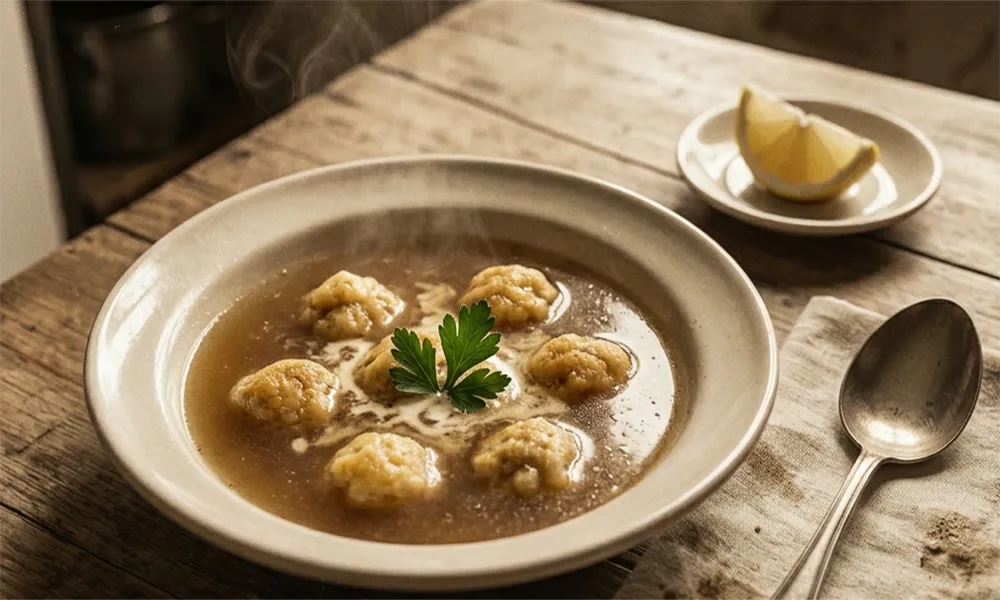
Beef Broth with Stuffed Dough Dumplings
Rich beef bone broth simmered with golden pan-fried dumplings stuffed with seasoned ground beef, finished with a light roux and fresh lemon juice.
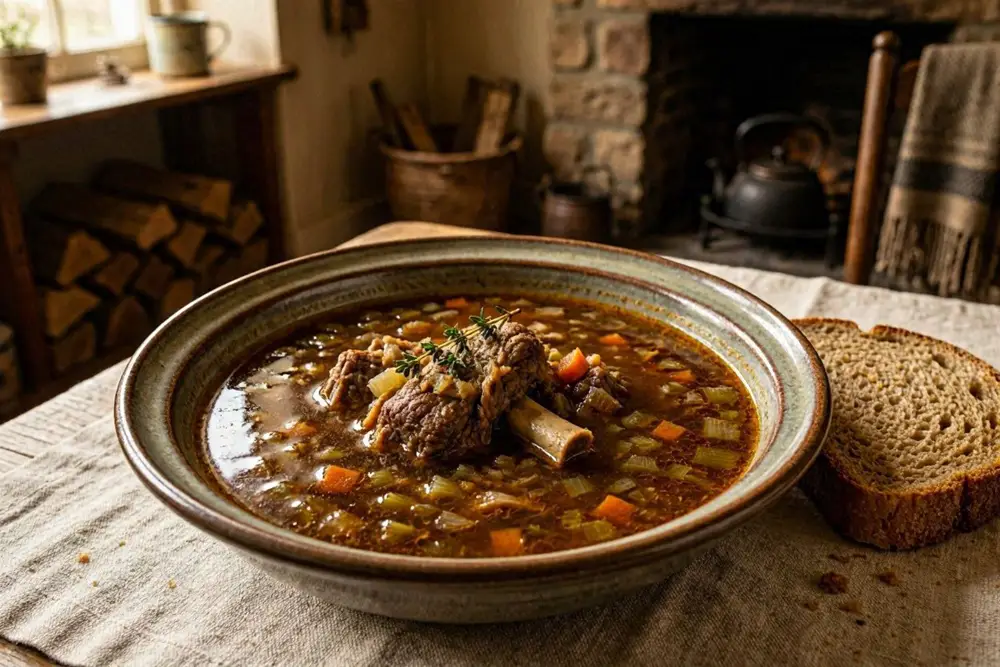
Oxtail Soup
A slow-cooked oxtail soup with seared flour-dredged tail, root vegetables, whole spices, and aged red wine stirred in at the finish.
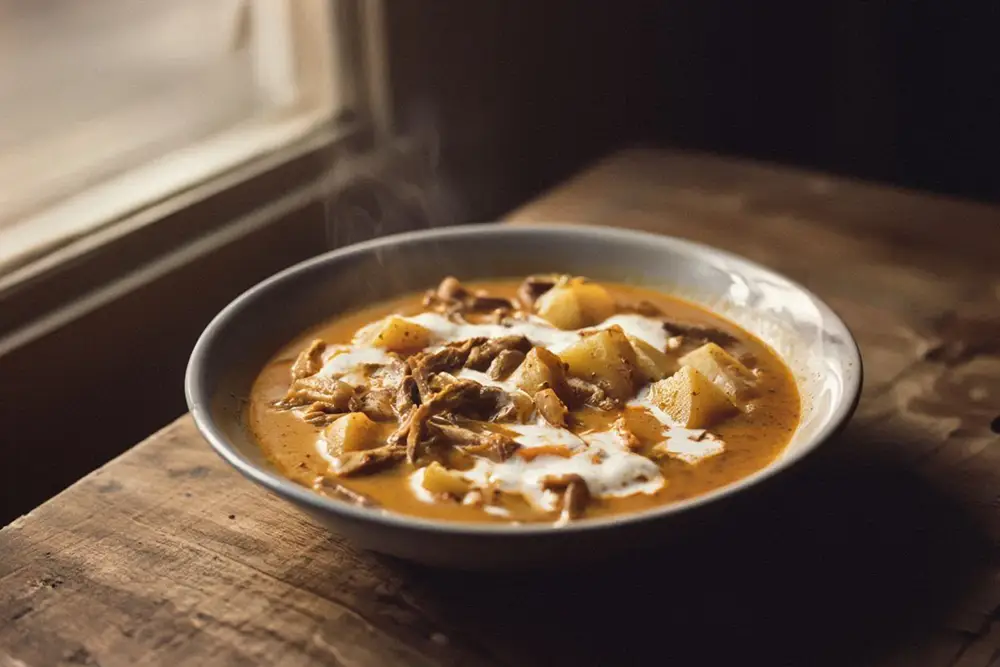
Tripe with Potatoes
Slow-cooked tripe cut into strips, simmered with onion and sweet paprika, finished with sour cream.