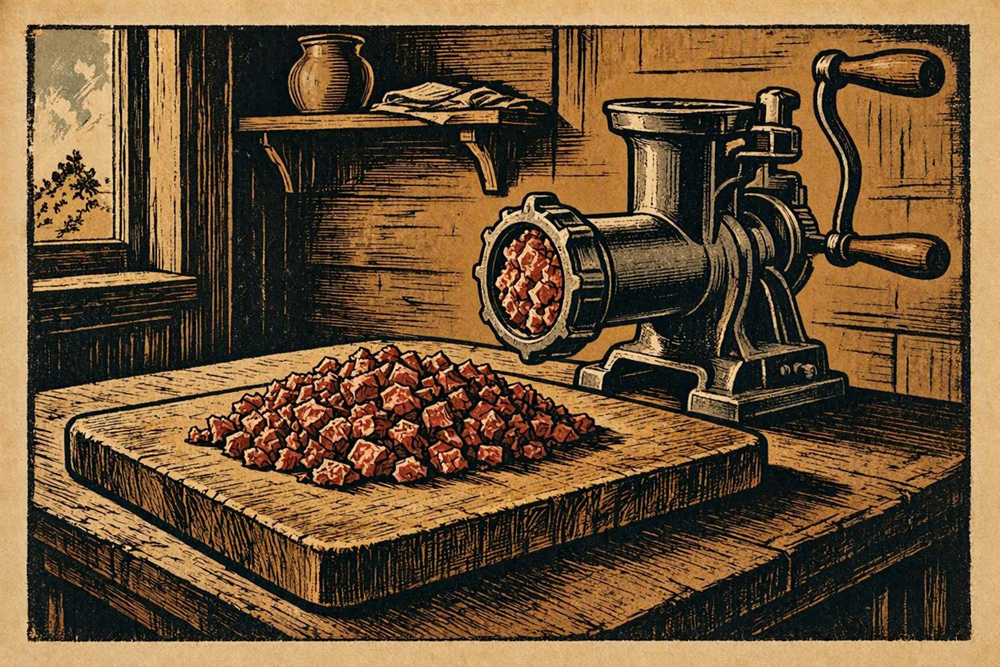
Finely Chopped vs Ground Meat: Why Old Recipes Specify the Difference
Hand-chopped meat behaves differently than machine-ground in soups, stews, and fillings. Here's why texture, moisture, and cooking method matter.
Introduction
If you’ve spent time with early 20th century Central European cookbooks, you’ve likely encountered a recurring instruction: meat should be “finely chopped, not ground.” At first glance, this seems like an unnecessary distinction—both methods produce small pieces of meat, after all. But the difference is deliberate, and it matters for how the dish turns out.
Before meat grinders became common household equipment, hand-chopping with a knife or cleaver was the standard method for preparing meat for soups, stews, and fillings. Even once mechanical grinders became widely available, many recipes continued to specify hand-chopped meat.
This post explains why the distinction exists, what happens to meat at a structural level when you chop versus grind it, and when it’s worth the extra effort to reach for the knife instead of the grinder.
The Structural Difference
At a microscopic level, chopping and grinding affect meat fibers in fundamentally different ways. When you chop meat by hand, you’re cutting through muscle fibers cleanly, creating small but distinct pieces with intact cell walls. These pieces retain their individual structure throughout cooking, which is why hand-chopped meat maintains a slightly firmer, more defined texture in the finished dish.
Ground meat, by contrast, is forced through a plate with small holes, which tears and compresses the fibers rather than cutting them cleanly. This creates a more homogeneous mass where individual pieces are no longer distinguishable. The increased surface area also means ground meat releases moisture more rapidly during cooking, which can lead to a drier texture if the meat is lean, or a greasier result if it contains significant fat.
The practical consequence: hand-chopped meat gives you visible, distinct pieces that hold their shape through long simmering. Ground meat tends to break down and blend into sauces, which is desirable in some dishes (like certain ragù preparations) but not in others where the meat should remain a distinct component.
Why Pre-Grinder Kitchens Chopped
Before the widespread adoption of mechanical grinders, hand-chopping was simply the available method. But it persisted in recipes even after grinders became accessible for several practical reasons. First, not every household owned a grinder—especially in smaller towns and rural areas, where manual food preparation remained standard well into the interwar period.
Second, and more importantly, the texture achieved through hand-chopping was often preferred for specific applications. In soups and broths where the meat should remain distinct and tender without disintegrating, hand-chopped pieces performed better. In fillings for pastries, dumplings, or stuffed vegetables, the slightly coarser texture provided better structural integrity and a more satisfying mouthfeel.
Third, hand-chopping gave the cook more control over the final product. You could select specific cuts, trim connective tissue precisely, and adjust the fineness of the chop based on the dish’s requirements. Early mechanical grinders, while convenient, offered less control over particle size and often required multiple passes to achieve the desired consistency.
When Chopped Meat Makes a Difference
Not every dish benefits from hand-chopped meat. Here are the applications where the distinction is most noticeable:
Long-simmered soups and stews
In dishes where meat simmers for an hour or more, ground meat tends to break down and can make the broth cloudy or give it a slightly grainy texture. Hand-chopped pieces hold their shape, remain distinct, and contribute to a clearer, more refined broth. This was particularly valued in Central European home cooking, where clear soups were a mark of skillful preparation.
Fillings for pastries and dumplings
Whether it’s a savory pie, stuffed cabbage, or filled dumpling, hand-chopped meat provides better texture and structural integrity. The pieces bind together without becoming a homogeneous paste, and the filling retains a pleasant bite rather than turning mushy during baking or steaming.
Dishes where meat should remain visible
In certain preparations—such as meat mixed with vegetables, rice, or grains—you may want the meat to remain a distinct component rather than blending into the overall mixture. Hand-chopping achieves this; grinding does not.
When controlling fat content matters
Hand-chopping allows you to select lean cuts and add fat deliberately if needed. Pre-ground meat from commercial sources often contains variable amounts of added fat, which can affect both the texture and the richness of the final dish.
Practical Technique: How to Chop Meat by Hand
If you’re working from a recipe that specifies hand-chopped meat, here’s how to approach it efficiently:
Start with the right cut. Lean cuts from the shoulder, leg, or loin work best. Avoid very tough cuts with excessive connective tissue unless you’re planning a very long cooking time. Trim away any large pieces of sinew or silverskin.
Partially freeze the meat. Place the meat in the freezer for 15–20 minutes before chopping. Firm meat is much easier to cut cleanly and reduces the tendency to smear or tear.
Use a sharp, heavy knife. A chef’s knife or cleaver works well. The knife should be sharp enough to cut cleanly through fibers without crushing them.
Cut against the grain. Slice the meat into thin strips perpendicular to the direction of the muscle fibers, then turn the strips and chop crosswise into small, uniform pieces. This shortens the fibers and makes the meat more tender.
Aim for consistency. The pieces should be small and relatively uniform—roughly 2–4 mm for “finely chopped.” Irregular pieces cook at different rates, which can affect texture.
Work in batches. Don’t overcrowd the cutting board. Spread the meat in a thin layer and chop systematically rather than trying to process large quantities at once.
When Ground Meat Is Preferable
There are legitimate cases where ground meat is the better choice, even in historical contexts. If the recipe calls for meat that should blend seamlessly into a sauce—such as certain ragù preparations, meat sauces for pasta, or dishes where the meat is meant to thicken and enrich the liquid rather than remain distinct—ground meat performs better.
Similarly, for preparations like patties, meatballs, or certain types of sausages where a homogeneous texture is desirable, ground meat provides the necessary binding and uniformity. The key is matching the preparation method to the intended outcome of the dish.
Practical Takeaways
- Hand-chopped meat retains more structure and moisture during cooking than ground meat.
- The distinction matters most in long-simmered dishes, fillings, and preparations where meat should remain visible and distinct.
- Ground meat is preferable when you want the meat to blend into a sauce or create a uniform texture.
- Partially freezing meat before chopping makes the process easier and produces cleaner cuts.
- If substituting ground for chopped (or vice versa), expect a noticeable difference in texture and adjust expectations accordingly.
Attic Recipes — digitizing and adapting Central European home cooking from the early twentieth century.
Frequently Asked Questions
01What's the difference between finely chopped and ground meat?▶
Finely chopped meat is cut by hand into small, irregular pieces that retain their structure during cooking. Ground meat is processed through a grinder, creating a uniform, paste-like texture that breaks down more easily.
02Why do old recipes specify 'chopped, not ground'?▶
Hand-chopped meat holds its shape better during long cooking, retains more moisture, and gives a distinct texture that ground meat cannot replicate. This was especially important in soups, stews, and fillings where the meat should remain visible and distinct.
03Can I substitute ground meat for chopped meat in historical recipes?▶
You can, but the texture will be different. Ground meat works better in dishes where the meat should blend into a sauce, while chopped meat is preferable when you want distinct pieces that hold their shape through cooking.
04What cuts of meat work best for hand-chopping?▶
Lean cuts from the shoulder, leg, or loin work well. Avoid very tough cuts with excessive connective tissue, as they require longer cooking regardless of how they're prepared. Partially freezing the meat for 15–20 minutes makes hand-chopping easier.