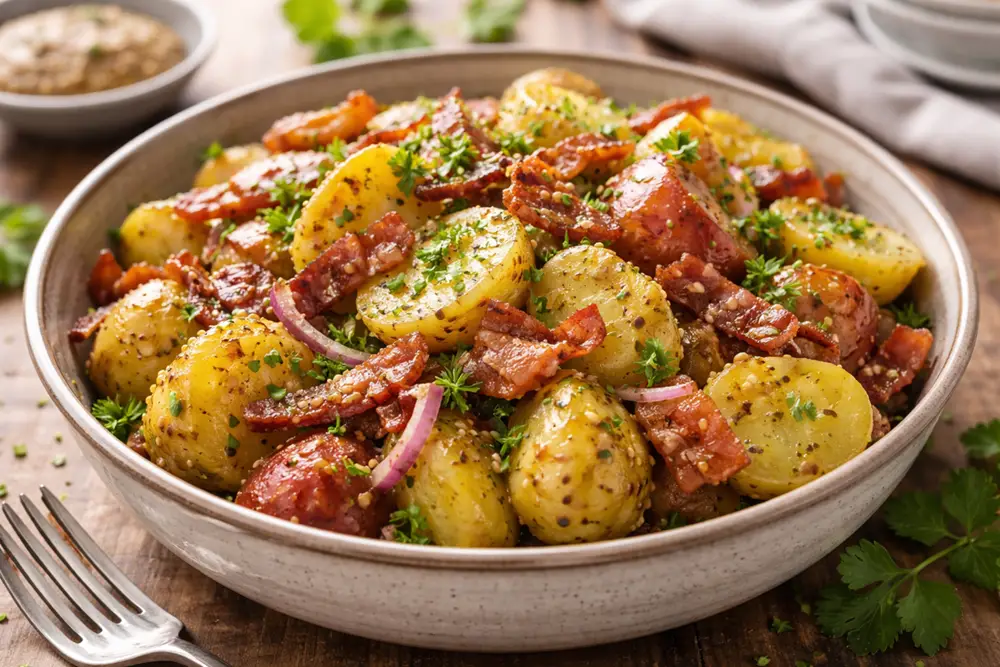
Warm Potato Salad with Bacon
A tangy, smoky warm potato salad dressed with hot bacon vinaigrette and mustard — a Central European staple, best served straight from the pan.
Historical recipe
Modernised adaptation of an early 20th‑century source. Not independently kitchen-tested by Attic Recipes. Quantities, temperatures, and food safety guidance have been updated for a contemporary kitchen — results may vary and errors may exist. Nutritional values, where provided, are estimates only and have not been laboratory tested. Always follow current food safety guidelines for your region. If you have a health condition, allergy, or dietary requirement, consult a qualified professional before preparing this recipe.
Use of this recipe is entirely at your own risk and subject to our Terms of Service and Privacy Policy. Attic Recipes accepts no liability for any adverse outcome.
- Mustard
- Sulphites
Additional notes
-
Note
This recipe contains smoked bacon and prepared mustard. Sodium content is moderate at approximately 849mg per serving; those managing sodium intake should reduce or omit the salt added to the boiling water.
- 1
Scrub the potatoes clean. Place them whole and unpeeled in a pot, cover with cold water, and add 1 tsp salt. Bring to a boil, then cook over medium heat for 20–25 minutes, until a knife slides in with only slight resistance. Do not overcook — waxy potatoes should hold their shape when sliced.
Tip Start checking at 18 minutes. The skin will just begin to split when they are done. - 2
Drain the potatoes and allow them to cool only until they can be handled — 3–4 minutes. Peel and slice into rounds approximately 4mm thick while still warm. Transfer to a large mixing bowl.
- 3
Cut the 100g smoked dry bacon into the smallest cubes possible. Place in a cold pan and render over medium heat, stirring occasionally, until the fat has released and the bacon is lightly crisp, about 6–8 minutes.
- 4
Add the 70g finely chopped red onion to the bacon and its rendered fat. Sauté over medium heat, stirring frequently, until the onion is well browned and soft, about 5–6 minutes.
- 5
Pour in the 60ml apple cider vinegar and 3 tbsp cooking oil. Add 1 tbsp mustard, 1 tsp salt, and 0.5 tsp black pepper. Stir to combine and bring to a brief boil, about 1 minute, until the dressing is cohesive and slightly reduced.
- 6
Pour the hot dressing immediately over the warm potato slices. Toss gently to coat, taking care not to break the slices. Taste and adjust seasoning.
- 7
Transfer to a serving bowl, scatter over the chopped parsley, finish with an extra grind of black pepper, and serve at once.
Nutrition Information per 1 portion (approx. 180g)
Nutritional values are approximate estimates and may vary based on specific ingredients used, preparation methods, and portion sizes.
Serving Suggestions
Best served immediately, while the dressing is still hot and the potatoes are warm. Pairs well with roasted pork, grilled sausages, or as a standalone light lunch with a slice of rye bread. A small gherkin on the side cuts through the richness of the bacon.
About This Recipe
Warm potato salad dressed with a hot bacon vinaigrette is one of those dishes that feels more substantial than its short ingredient list suggests. The technique is simple but deliberate: the dressing goes onto the potatoes while both are still hot, which allows the starchy slices to absorb the smoky, tangy liquid rather than sit under it. The result is a salad that is neither dry nor swimming in dressing — each slice is evenly coated and deeply flavoured.
The combination of smoked bacon, browned onion, vinegar, and mustard was a reliable formula in Central European kitchens of the early twentieth century. These were everyday pantry ingredients, and their proportions were adjusted by feel rather than by recipe. What survives in written form is often sparse — a list of ingredients and a loose method — leaving the quantities to be reconstructed from context and cooking logic.
This version stays close to that tradition. Nothing has been substituted or softened. The bacon is rendered in a dry pan until the fat runs, the onion goes in next and browns properly, and the dressing comes together in the same pan before being poured hot over the potatoes. It is a side dish, but not a modest one.
Why It Works
The key to this salad is temperature and timing. Warm potatoes are porous in a way that cold ones are not — the starch granules are still slightly swollen from cooking, and they absorb liquid readily. Pouring a hot dressing over warm slices means the vinegar and fat penetrate the potato rather than coating only the surface. Serving immediately preserves this effect; as the potatoes cool, absorption slows and the dressing settles on the surface rather than into the flesh.
Mustard does more than add flavour here. As an emulsifier, it helps bind the vinegar and oil into a cohesive dressing rather than letting them separate in the pan. Even a single tablespoon is enough to give the dressing a consistency that clings to the potato slices.
Modern Kitchen Tips
Waxy potatoes — sometimes sold as “pink” or “salad” varieties — are essential. Floury or all-purpose potatoes will break apart when tossed with the dressing. If you are unsure which type you have, look for a firm, smooth flesh with a low starch content; the skin should feel thin and the interior should appear yellowish-white rather than stark white.
Slice the potatoes while they are still warm, not hot. Letting them cool for 3–4 minutes after peeling makes them easier to handle and reduces the chance of the slices crumbling at the edges.
The dressing should hit the potatoes while still bubbling from the pan. Do not make the dressing in advance.
A classic of early 20th century home cooking, preserved and adapted for the modern kitchen.
The Story Behind This Recipe
Historical Context
Warm potato salads dressed with hot bacon fat and vinegar were firmly established in Central European home cooking by the early twentieth century. Unlike cold mayonnaise-based salads that became fashionable later, this style relied on the rendered fat of smoked bacon as its base — a practical and flavourful technique when refrigeration was limited and pantry ingredients had to do double duty. The mustard was a constant, used both as a condiment and as an emulsifier long before home cooks understood the chemistry behind it. Pink-skinned waxy potatoes were the preferred variety; their firm, low-starch flesh absorbed the dressing without turning to mush. The original gave no quantities for vinegar or oil — the dressing was made by feel.
Modern Kitchen Adaptation
Vinegar and oil quantities are estimated from the expected yield and standard period ratios for this style of dressing; both are marked as estimated in the ingredient list. Apple cider vinegar is used as a period-appropriate choice with a mellow acidity that does not overwhelm the bacon. The potatoes are boiled whole and unpeeled to preserve texture, then peeled and sliced warm — this is faithful to the original method and the most effective technique for dressing absorption. No other substitutions were made; the recipe is inherently simple and requires no further modernisation.
This recipe is an independent modern adaptation developed from historical sources in the public domain. It is provided for informational and educational purposes only and does not constitute professional dietary, nutritional, or medical advice. Food preparation involves inherent risks. The reader assumes full responsibility for safe food handling, ingredient sourcing, and adherence to current local food safety guidelines. The site operator accepts no liability for outcomes resulting from the preparation or consumption of this recipe.
One recipe.
Every week.
You Might Also Like
More recipes from the same category
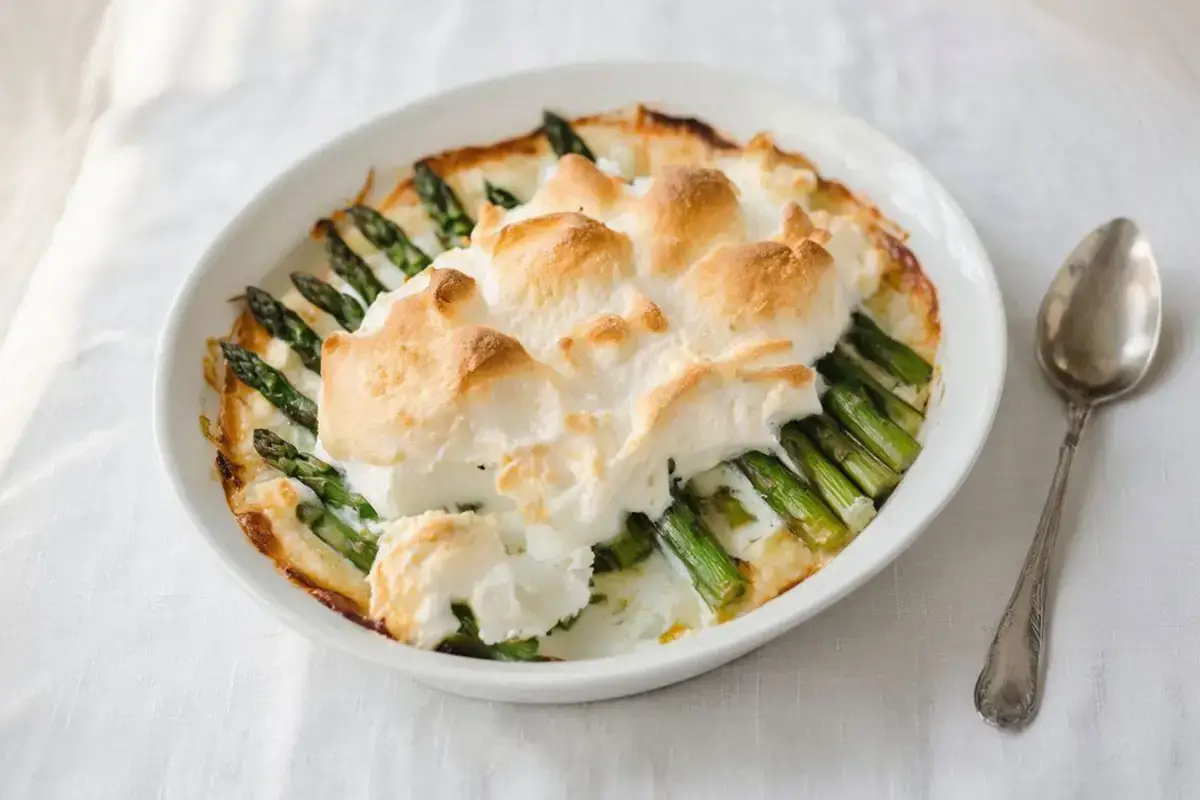
Asparagus Venetian Style
Fresh asparagus baked under a rich egg yolk cream sauce and a golden meringue-cheese topping. An elegant Central European appetizer.
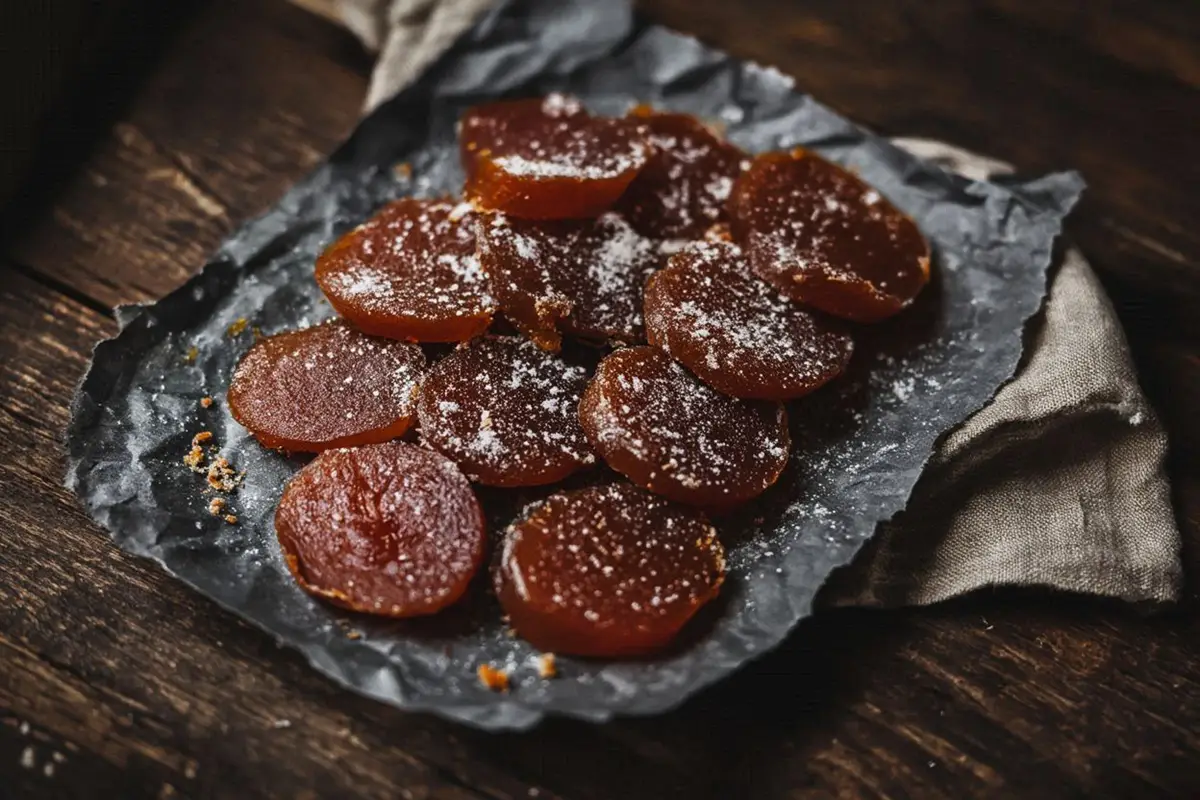
Apricot Fruit Paste
Sieved ripe apricots cooked with equal weight sugar and lemon juice, poured into molds and air-dried — from early 20th century Central European kitchens.
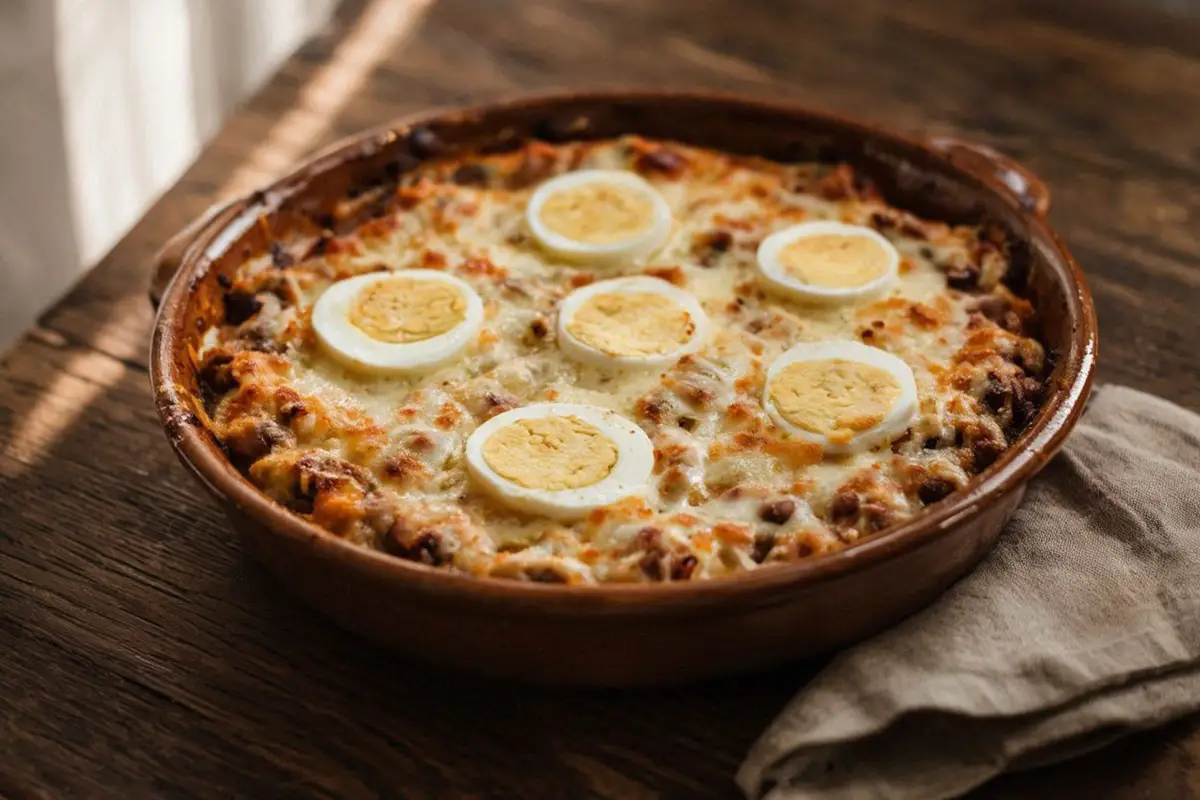
Bean Moussaka Without Meat
A hearty Central European vegetarian moussaka of pureed white beans layered with hard-boiled eggs, kashkaval cheese, and a sour cream custard topping.